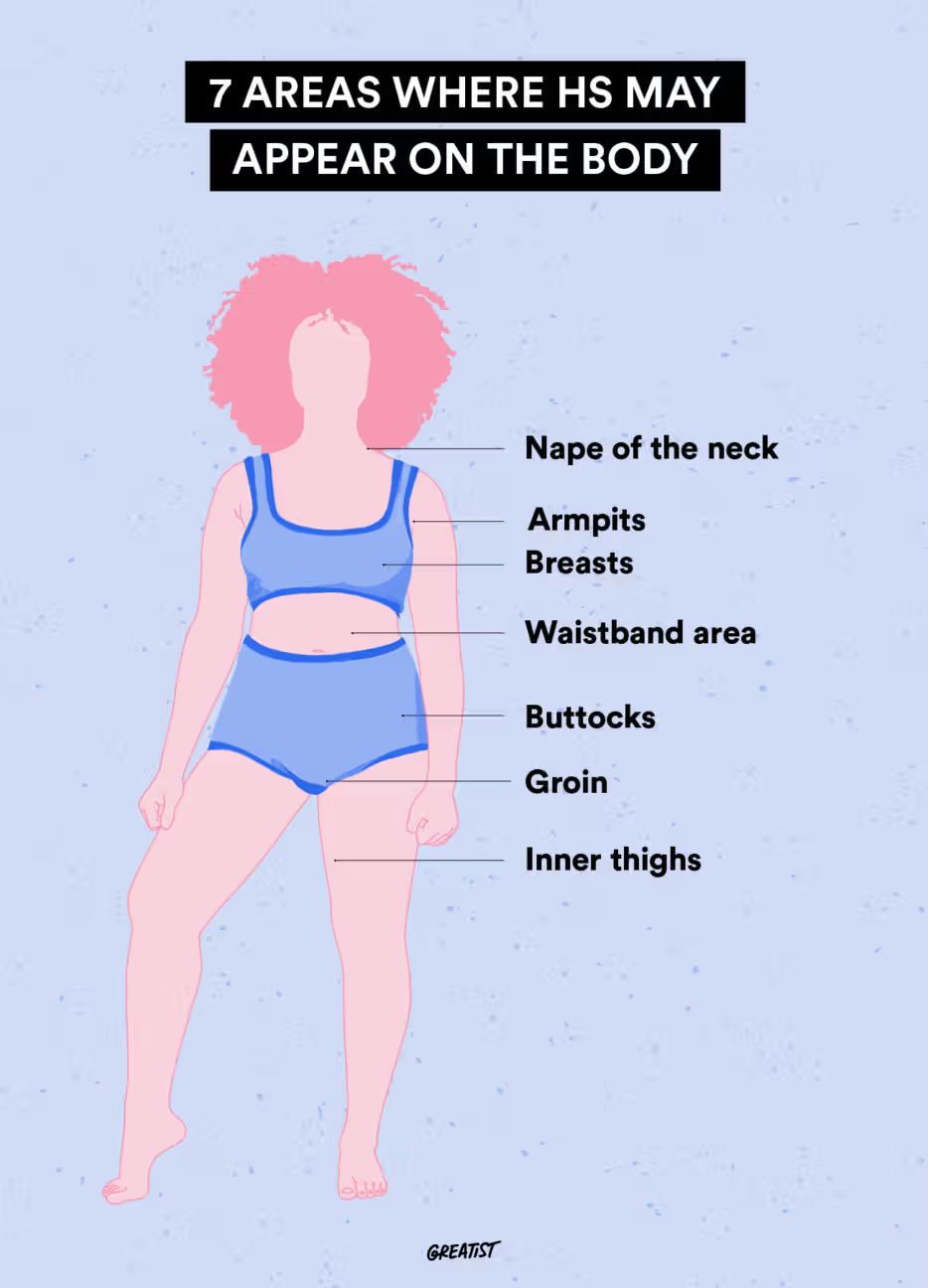
Hidradenitis suppurativa (HS) is a chronic, progressive skin condition that causes boil-like lumps to form in areas with hair follicles and apocrine glands. While infections often accompany HS, the disease itself stems from an ongoing inflammatory response rather than an infection.
HS commonly develops in seven body areas prone to sweat and friction. The underarms contain many hair follicles and sweat glands that can become clogged, and friction from clothing or skin-on-skin contact can trigger flares. Shaving, waxing, antiperspirants, and deodorants can further irritate the area.
The breast area, including underneath and around the areolae, frequently develops HS. Chafing from bras or clothing can trap sweat and bacteria. Sex hormones may also play a role, though more research is needed on this connection.
The groin and inner thighs are susceptible because they contain apocrine glands and hair follicles that can become blocked. Sweat accumulation and friction from movement or clothing contribute to flares. Pubic grooming can also lead to blocked follicles.
The buttocks, including the anus, butt crack, and gluteal fold, commonly develop HS due to abundant apocrine glands and hair follicles. Pressure from sitting adds further irritation. Some studies suggest a link between HS and inflammatory bowel disease, which may explain why this area is frequently affected.
HS can also appear at the nape of the neck, though less commonly, likely from friction caused by clothing collars or jewelry. Tight waistbands or skin folds at the waist can cause HS lesions on the abdomen, back, or sides.
Genetic, environmental, and hormonal factors may contribute to HS development, though the exact cause remains unknown. A dermatologist can provide proper diagnosis and a treatment plan.