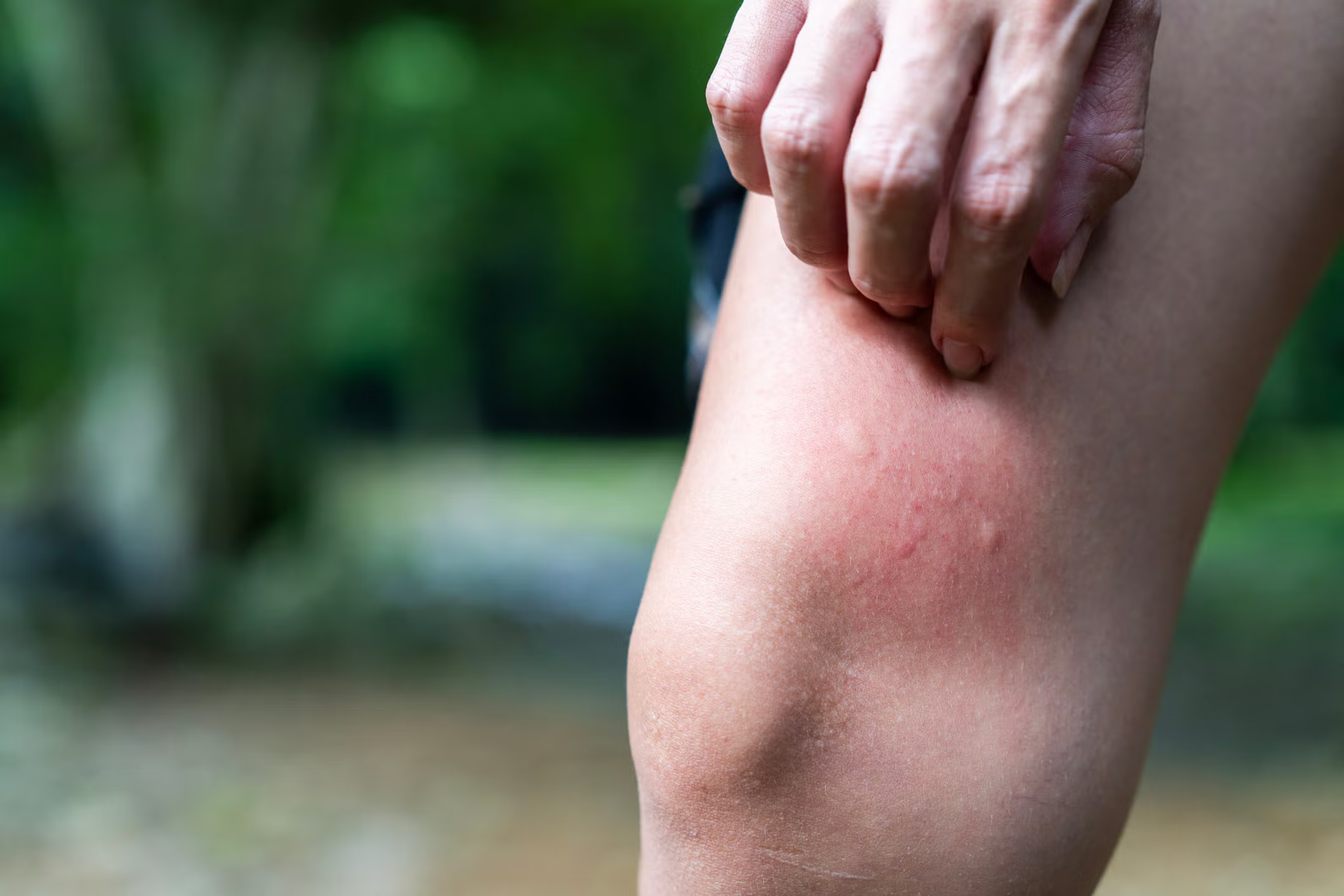
Flea bites on humans appear as small, red bumps with a "halo" around the bite center, according to Jim Fredericks, Ph.D., a board-certified entomologist and senior vice president of public affairs at the National Pest Management Association. The bites usually appear in groups of three or four, or in a straight line. Fleas typically bite people on their lower halves like ankles or legs, though bites can occur anywhere on the body.
Most people experience extreme itchiness from flea bites, says Cody James Pace, associate certified entomologist and market technical director for Terminix. Flea bites closely resemble mosquito bites, according to Lynn Kimsey, Ph.D., distinguished professor emerita in the Department of Entomology at UC Davis. One way to distinguish them is that flea bites occur more often indoors and underneath clothes than mosquito bites do.
An allergic reaction to flea saliva, known as flea allergic contact dermatitis, is one of the most likely health risks, says Gary Goldenberg, M.D., assistant clinical professor of dermatology at Icahn School of Medicine at Mount Sinai Hospital. Scratching can cause secondary infections and, in some cases, staph infection. Though uncommon in the United States, fleas can transmit typhus and plague, according to Ife J. Rodney, M.D., founding director of Eternal Dermatology + Aesthetics. Fleas can also carry tapeworms and transmit bacteria that cause cat scratch disease.
If you suspect a flea bite, Dr. Rodney recommends cleaning it with soap and water and avoiding scratching. Dr. Goldenberg recommends applying a topical steroid cream like hydrocortisone for itching. If you suspect infection, see a doctor who may prescribe antibiotics. For serious illness like typhus, emergency medical care is needed right away, Dr. Goldenberg says.
To prevent infestations, Matt Frye, rodent and structural pest management coordinator at Cornell Integrated Pest Management, recommends ensuring pets receive flea management medication from a veterinarian. If fleas are in your home, a pest management service can perform a thorough inspection and control all life stages of the pest. Daily vacuuming in areas of suspected flea activity, including where pets sleep, helps reduce populations. Place pet bedding in a dryer on the hottest setting for 30 to 40 minutes without washing first, as dry heat kills insects.
Nancy Hinkle, Ph.D., professor in the Department of Entomology at the University of Georgia College of Agricultural and Environmental Sciences, notes that fleas usually reach people through animals. Checking indoor-outdoor pets regularly and discouraging wildlife visits can help prevent infestations.