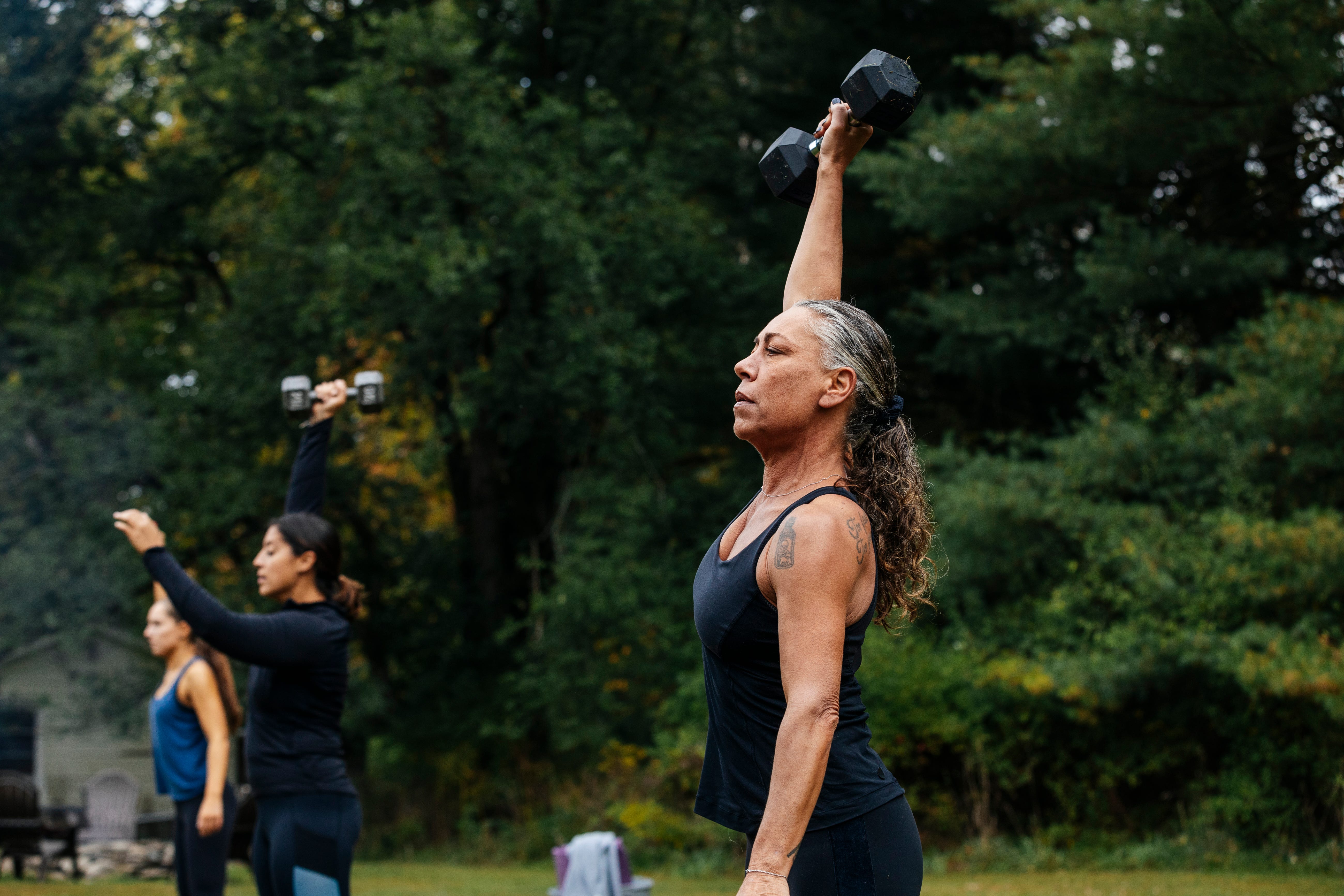
Nicole Leung, MD, director of the Osteoporosis and Bone Health Program at NYU Langone Health, recommends consistent weight-bearing and resistance exercises as the first line of defense for preserving bone health in people with osteopenia or osteoporosis. When bone tissue experiences physical stress, your body responds by making more bone and lowers the activity of cells that break down old bone. This combination helps preserve or improve bone mineral density.
Weight-bearing exercises, where you put force on your muscles and bones against gravity, should be done 30 to 60 minutes, three to five days per week, according to the American College of Sports Medicine. Swimming and cycling, while good for cardiovascular health, won't help your bones because they're low-impact.
Strength training with free weights, machines, resistance bands, or body weight exercises like squats and push-ups should happen two to three times per week. Research suggests pushing yourself to 70 to 90 percent of your maximum effort may deliver a bigger bone boost than lifting lighter weights. Balance exercises like yoga, tai chi, or Pilates, done a few times per week, can reduce your chances of fractures from falls.
However, certain yoga poses pose risks for spine fractures. Dr. Leung warns against forward bends, deep twists, plow pose, shoulder stand, and pigeon pose. Also avoid high-impact activities with fall risk, like skiing or horseback riding.
Dr. Leung cautions against back-to-back intense weight-bearing workouts. "Overburdening your bone can actually lead to stress fractures," she says. Alternate intense exercise with strength training or active recovery days like walking or tai chi.
Stop exercising and call your doctor if you experience new or worsening bone or spine pain, fall during exercise, notice height loss, or see spinal curvature. People with low bone density who stay active over several months see the greatest bone-health benefits, studies show.