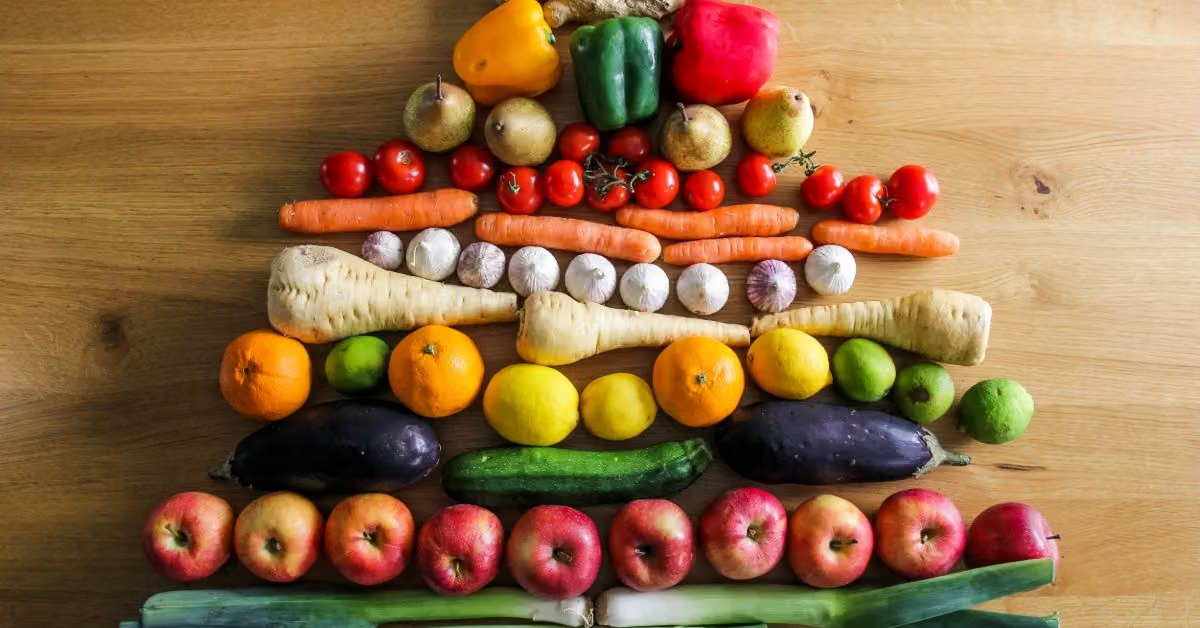
A new international food pyramid developed by 22 nutrition experts prioritizes plant-based foods, healthy carbohydrates, and unsaturated fats while allowing lean animal proteins. The pyramid was led by Brigham and Young University professor Karen Della Corte and published in Advances in Nutrition in September. Researchers from the International Carbohydrate Quality Consortium compared dietary guidelines from Canada, Germany, Australia, the United States, China, the Netherlands, and Nordic countries. They analyzed evidence from more than 250 scientific publications and drew on the EAT-Lancet Planetary Health Diet.
The pyramid rests on three principles. Plant foods form the foundation, with vegetables, fruits, whole grains, and legumes as the base of meals. People should choose unsaturated plant oils like olive and canola over saturated fats such as butter and tallow, and select poultry, fish, and legumes over red and processed meats. For carbohydrates, quality matters more than quantity, considering factors like fiber content, processing level, and glycemic index.
This approach differs from updated U.S. dietary guidelines, which emphasize animal proteins including red meat. Both sets of guidelines discourage added sugars, refined carbs, and highly processed foods. Michelle Routhenstein, a preventive cardiology dietitian at Entirely Nourished, said the new pyramid offers "a more practical and aligned approach for the prevention of chronic disease" by building meals around nutrient-dense plant foods while allowing lean animal proteins.
Research shows plant-forward eating patterns, including the Mediterranean and DASH diets, support cardiovascular health and help manage cholesterol, blood pressure, and blood sugar. Plant foods provide fiber, potassium, antioxidants, and compounds that support healthy blood vessels and cholesterol levels. Della Corte recommends choosing beans, peas, lentils, fish, poultry, or yogurt more often than red meats, cooking with canola or olive oil, and selecting whole grain options. The pyramid serves as a framework rather than a personalized prescription. Routhenstein noted that plant-forward eating does not require being vegan or vegetarian, and individuals should align their protein sources with their cardiometabolic goals.