Protein bars can be useful snacks, but choosing wisely matters. Not all bars deliver equal nutrition, according to Keri Gans, M.S., R.D.N., C.D.N., author of The Small Change Diet.
When selecting a bar, Gans recommends checking the calorie count, which ranges from 150 to 400 calories depending on the variety. Mascha Davis, M.P.H., R.D.N., founder of Nomadista Nutrition, notes that "some of them are very high in sugar and low in nutrient density," so reading the nutrition label matters.
Davis recommends keeping sugar below 12 grams per bar and looking for whole ingredients like nuts and fruits at the top of the ingredient list rather than added sugars. Karen Ansel, M.S., R.D.N., C.D.N., suggests aiming for bars with between 6 and 12 grams of protein to stay full and support muscle building.
For snacks between meals or post-workout, Davis suggests sticking to bars between 180 and 250 calories. If using a bar as an occasional meal replacement, Gans recommends aiming for around 400 calories total.
Pay attention to sweetening types as well. Heather Mangieri, R.D.N., C.S.S.D., notes that many brands use sugar alcohols like sorbitol, xylitol, erythritol, and maltitol. These can occasionally cause gas and bloating, so avoid them if you experience gastrointestinal discomfort.
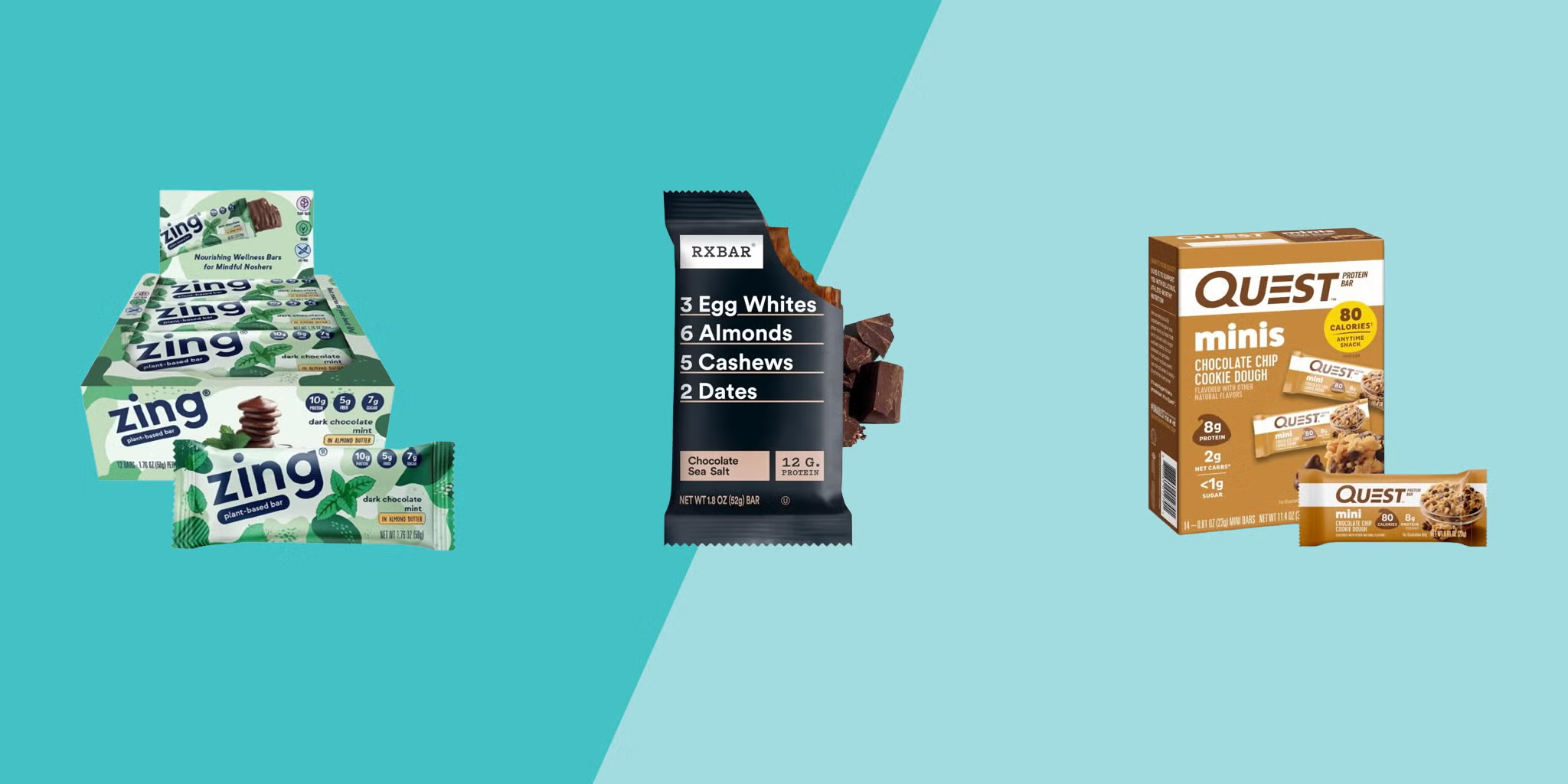
Specific bars mentioned include One bars (20 grams protein, 1 gram sugar), Quest Minis (1 to 2 grams sugar), Aloha bars (14 grams protein, 4 to 5 grams sugar), and RXBar, which lists its short ingredient list on the front of its packaging using whole food sources like dates and dark chocolate for sweetness.