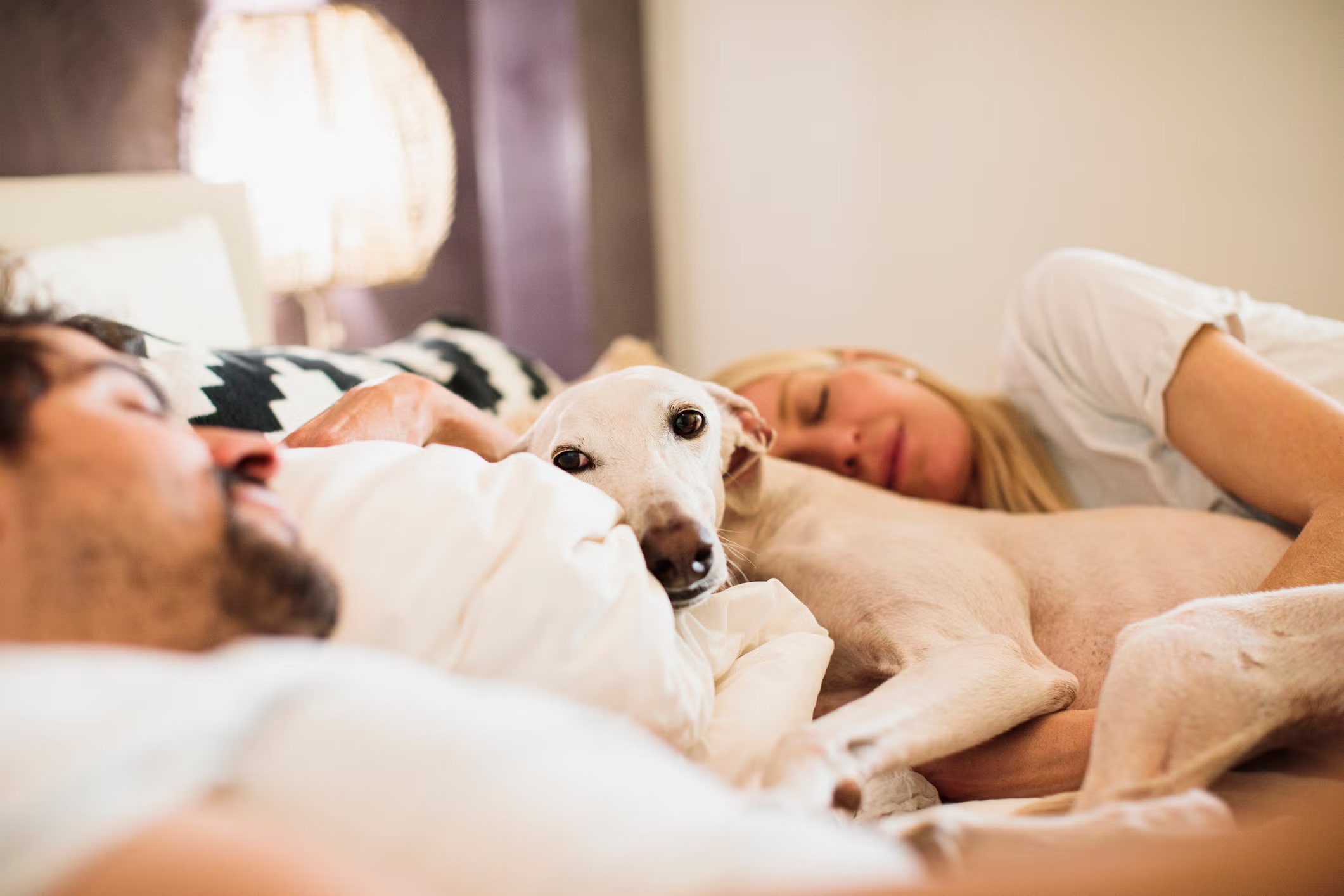
Nearly half of Americans sleep with a pet in their bed, according to a survey by the American Academy of Sleep Medicine. For many people, this arrangement works fine. A small study by University of Toronto researchers found that dogs sleeping on the bed did not negatively or positively impact human sleep compared to dogs sleeping elsewhere in the room or house.
"We did not find that dogs who slept on the bed negatively or positively impacted human sleep more so than dogs who slept in the room or elsewhere in the house," says Ming Fei Li, an evolutionary anthropologist and study author. "That was a little bit surprising."
One notable finding emerged: humans with multiple dogs in bed self-reported worse sleep. All study subjects had Huskies, a breed that takes up more space than smaller breeds.
A dog's age and temperament matter. Puppies wake frequently for feedings and bathroom breaks. Older dogs also wake more often and may need assistance getting on and off the bed. "The schedule and duration of your sleep may be negatively affected, especially if your pet wakes up during the night or early in the morning," points out Jing Wang, M.D., clinical director of the Mount Sinai Integrative Sleep Center.
For common sleep disruptions, trainers and doctors offer practical solutions. Shannon Walker, a dog trainer and CEO of Northwest Battle Buddies, suggests teaching dogs commands like "move" or "back" to respect your sleeping space. For dogs that wedge between partners, Walker recommends tethering the dog to its own bed with a 4 to 6 foot leash to prevent middle-of-bed positioning.
Overheating is common when sharing a bed with a dog. Jerry Hu, D.D.S., of Nevada Dental Sleep suggests using cooling mattresses and bedding. A fan can provide both air movement and background noise.
Walker recommends exercising your dog throughout the day so it arrives at bedtime tired. An evening walk or play session helps dogs settle and fidget less overnight.
For people with allergies or asthma, Dr. Wang typically does not recommend bed sharing with pets. If you proceed anyway, wash bedding regularly in hot water and consider allergen-proof pillow and mattress covers. A HEPA air purifier in the bedroom can help reduce pet dander.