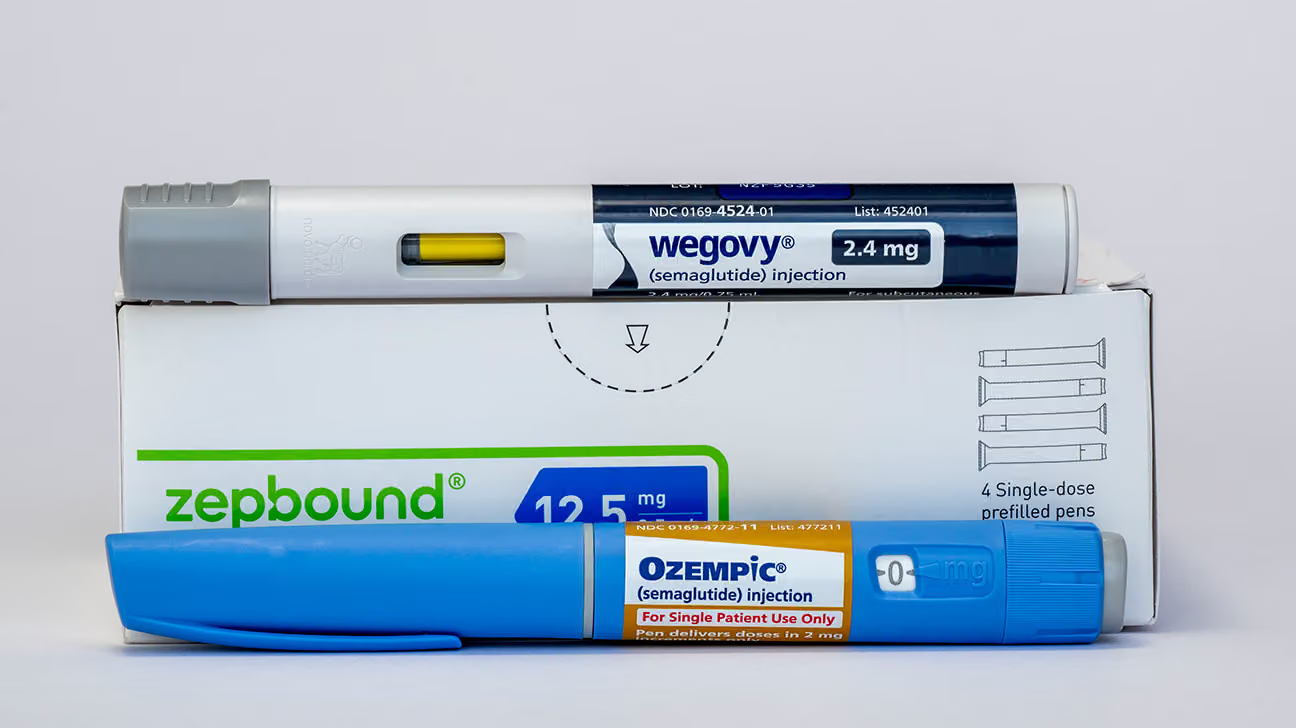
The FDA announced on November 9 that it will require drugmakers to add warnings to labels of GLP-1 medications including Ozempic, Wegovy, Mounjaro, Zepbound, and others about a potential increased risk of nonarteritic anterior ischemic optic neuropathy (NAION), a rare eye condition that can cause sudden vision loss.
NAION damages the optic nerve when it does not get enough blood. This adds a second eye warning to several GLP-1 labels, which already warn about diabetic retinopathy, a diabetes-related eye disease affecting different parts of the eye.
A 2024 study published in JAMA Ophthalmology triggered the FDA's review. The study found a higher risk of NAION in people prescribed semaglutide, the active ingredient in Ozempic and Wegovy, than in people prescribed other diabetes or weight-loss drugs. Joseph F. Rizzo III, MD, director of the Neuro-Ophthalmology Service at Mass Eye and Ear in Boston, served as the study's corresponding author. He reported seeing three patients with NAION who were taking semaglutide for about a week, which led him to suspect a higher risk.
The FDA analyzed clinical trials for multiple GLP-1 drugs and noted that NAION cases were reported with every GLP-1 on the market. This led the agency to require the warning for the entire drug class.
About 70% to 80% of people with NAION first notice vision loss when they wake up. Symptoms include sudden, painless vision loss in one eye, blind spots, tunnel vision, distorted colors, and blurry or hazy spots in the center of vision. No treatment has been proven to reverse vision loss from NAION.
Across 126 clinical trials, the FDA found about 6 NAION cases per 100,000 people taking a GLP-1 for a year, compared with about 4 per 100,000 people taking a placebo or another diabetes drug for a year.
Risk factors for NAION include smoking, a past case of NAION in one eye, diabetes, high blood pressure, sleep apnea, kidney disease, and anemia. The FDA noted that many people who take GLP-1s also have these conditions.
Mihail Zilbermint, MD, director of endocrine hospitalists at Johns Hopkins, told Healthline he has seen vision worsen in some people after they start a GLP-1, but believes this is probably related to rapid improvement in sugar control. He said the overall risk is still very small and that for most of his patients with obesity, diabetes and heart disease, the benefits of GLP-1s clearly outweigh the risks.
The FDA told Healthline that patients experiencing sudden, painless vision loss in one eye should contact their healthcare professional immediately and should not stop their medication without consulting their provider first. The agency also said the benefits of GLP-1s continue to outweigh their risks when used as directed.
Regulators in the European Union, United Kingdom, and Australia have added similar warnings for semaglutide.