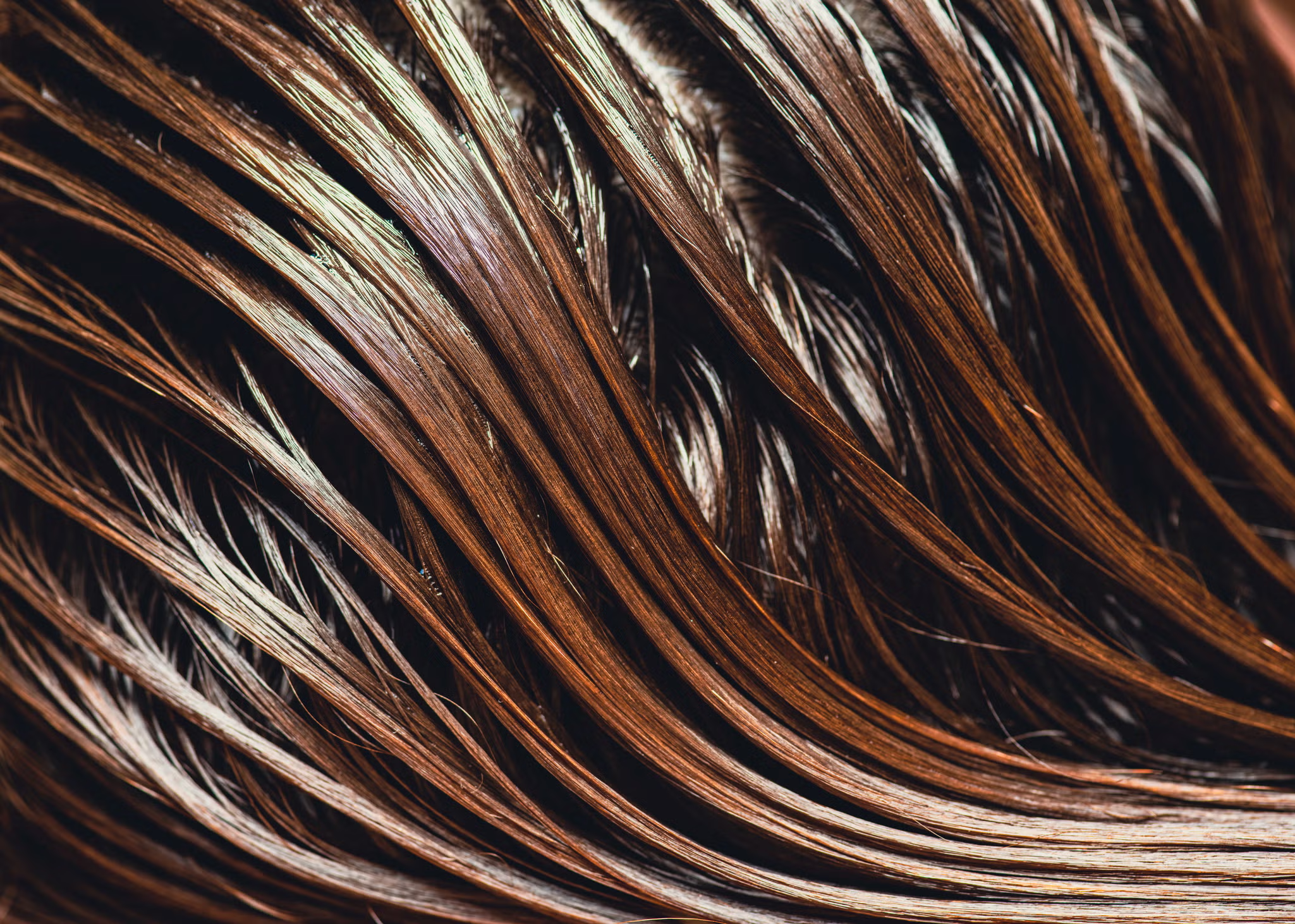
Hair strength is defined by resilience, or how well individual strands withstand stress from brushing, stretching, and styling without breaking, according to Dr. Sherry Maragh, a board-certified dermatologist based in Virginia. That strength comes largely from the cuticle, which acts as a protective outer layer, and the cortex, which contains keratin proteins responsible for structural integrity.
Elasticity matters too. It measures the ability of hair to stretch and return toward its original shape without snapping. Nathan Puksta, founder and CEO of FILAMENT Sciences, a haircare brand focused on stronger hair science, notes that tensile strength is one of the most useful measurements. Tensile strength quantifies how much force a strand can withstand before breaking, like the difference between brittle dry spaghetti and a flexible rubber band. Laboratories can measure tensile strength using calibrated equipment that pulls individual hair fibers until they break.
An important clarification: strength isn't synonymous with thickness, density, or shine. "Hair can absolutely be strong while still being fine, thin, or less reflective," says Dr. Maragh. "Similarly, hair that appears thick and glossy is not necessarily resistant to breakage."
Puksta identifies five major contributors to weakened hair: chemical processing, mechanical damage, heat, environmental exposure, and aging. Chemical treatments like bleaching and certain straightening processes are especially damaging because they alter the hair's internal structure.
Strengthening products can help, but with limits. "The visible hair shaft is made up of nonliving cells, so damaged hair cannot biologically heal in the way skin does," says Dr. Maragh. Certain ingredients can improve hair's physical properties, reduce friction, reinforce weakened areas, and help prevent additional breakage. Bond-building treatments target chemical interactions within hair, while certain peptides and proteins can reinforce its keratin structure. However, effectiveness varies considerably between formulations.
Dr. Maragh cautions that when evaluating product claims, examine what was actually measured, the comparison group, and whether results came from laboratory testing or consumer feedback. Protein retention, for example, isn't the same measurement as tensile strength.
Maintaining strength requires both prevention and treatment. Consistent conditioning, gentler styling practices, and choosing products suited to your hair type can help protect existing strands while healthy new hair grows.