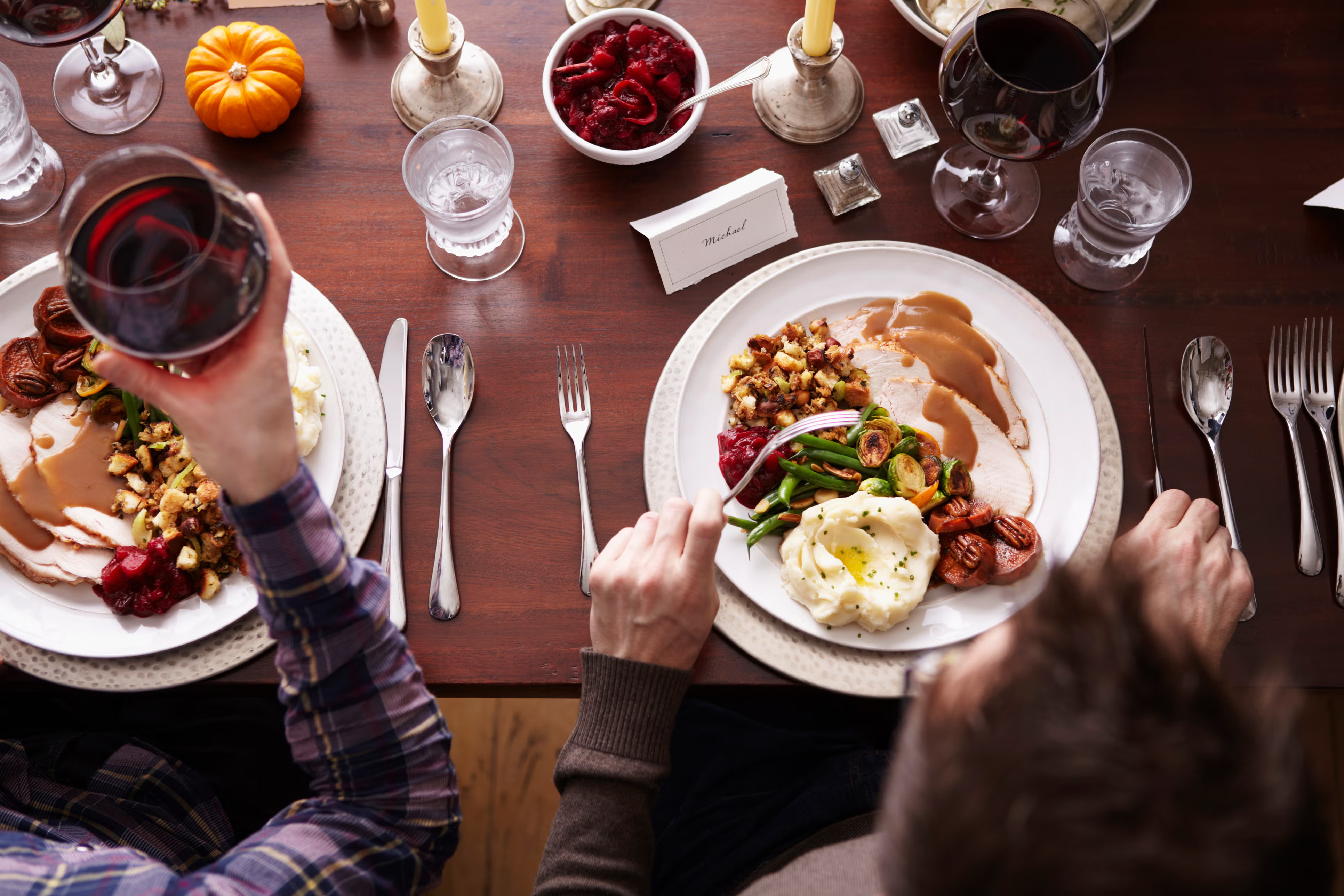
Skipping meals before a major holiday dinner often backfires, according to a dietitian interviewed for this article. The plan assumes hunger will build gradually and arrive at just the right level by dinnertime. What actually happens is different.
Ghrelin, the hormone linked to hunger, rises before usual mealtimes and falls after eating. Skip breakfast and lunch, and those hunger signals accumulate over hours, making hunger more urgent rather than simply larger.
Research supports this pattern. A symposium overview in the Journal of Nutrition reviewed controlled feeding studies and found that eating fewer than three meals a day may impair appetite control. The authors noted that many studies were small and short-term, so no single "right" number of meals works for everyone. The research shows no evidence that long gaps make appetite easier to manage.
Arriving ravenous changes how you eat. You're more likely to eat quickly and reach for whatever is closest rather than the dishes you anticipated all year. Fullness signals take time to register, so eating fast can carry you past comfortable fullness before you notice it.
A systematic review on winter holidays and eating behavior found that food variety, visible platters, longer meals, and eating with others all link to eating more than people might alone. A small study in the International Journal of Obesity found that people reported feeling less satisfied by the same meal during the holidays than beforehand, suggesting extra food cues make fullness harder to recognize.
Going many hours without food can also leave people feeling shaky, tired, distracted, or irritable. Data shows that eating breakfasts higher in fiber and whole grains link to better appetite control and mood versus skipping breakfast.
For people with diabetes who take insulin or certain glucose-lowering medications, skipping meals raises the risk of low blood sugar. The article recommends talking with your health care team about holiday meal planning.