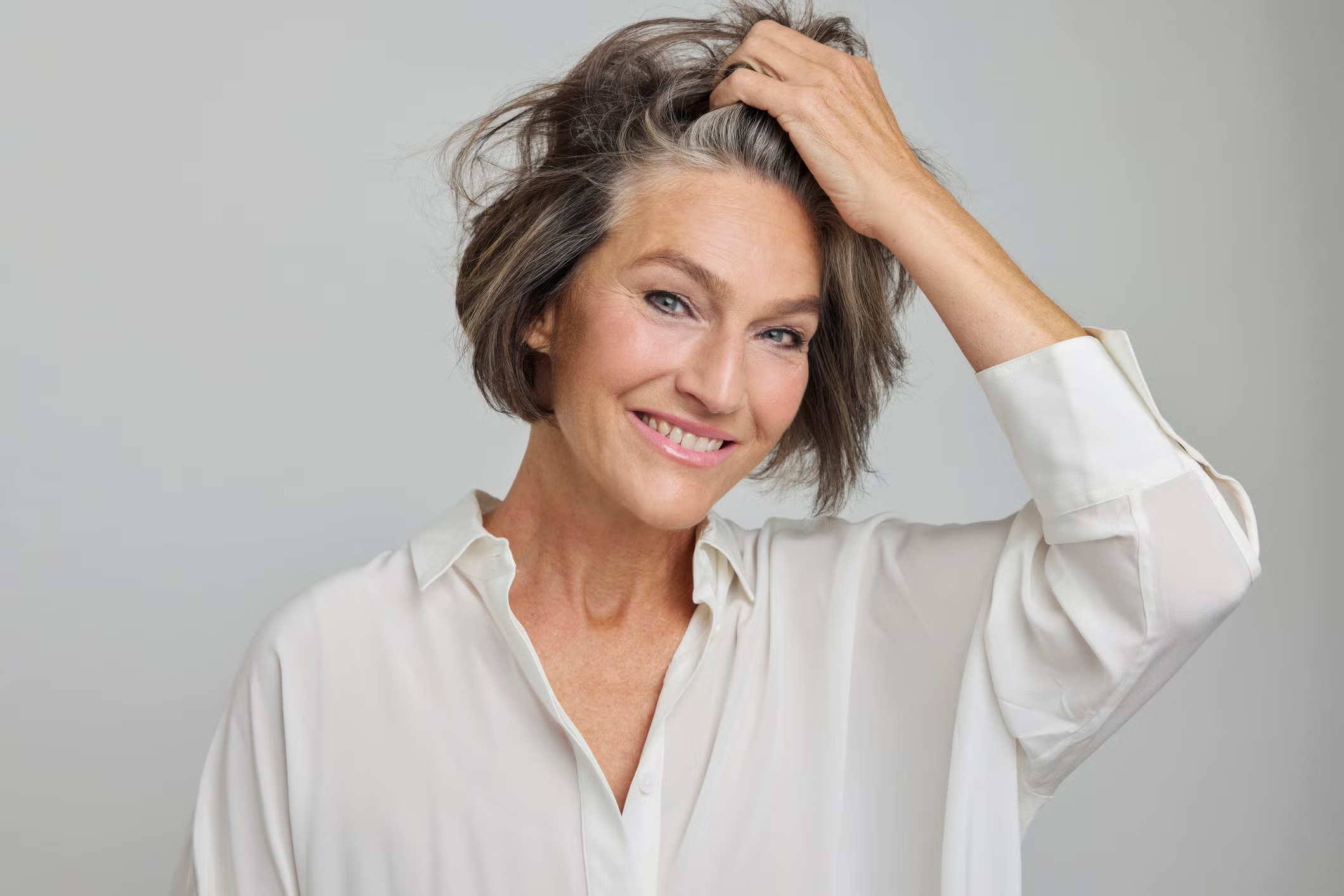
# Transitioning to Gray Hair: A Specialist's Guide to Making the Shift
Growing out gray hair represents a major aesthetic decision, one that requires strategy and patience. A gray blending specialist explains the practical steps to help people navigate this transition with confidence.
The journey from colored to natural gray hair doesn't happen overnight. Most people who decide to stop dyeing their hair face weeks or months of visible roots before achieving a fully gray appearance. This awkward phase frustrates many, causing them to abandon the transition and return to their dye routine.
Gray blending offers a solution. Instead of covering gray completely, this technique incorporates existing gray strands into the overall color design. The approach works by adding dimension through highlights, lowlights, or babylights that blend the gray with remaining darker hair. This creates a cohesive look rather than a stark line of demarcation between dyed and natural hair.
The process typically unfolds over multiple salon visits. A skilled colorist assesses your current hair color, the percentage of gray you have, and your desired end result. They then create a strategic plan that gradually shifts your appearance toward full gray while maintaining flattering tones throughout the transition period.
Timing matters considerably. Most colorists recommend scheduling appointments every 4 to 6 weeks, depending on how fast your hair grows and how visible your roots become. Shorter intervals mean less time managing the two-tone effect between appointments. Some people choose to cut their hair shorter during the transition, which reduces the visual contrast between gray and colored sections.
Hair texture and thickness affect the transition timeline. Fine hair may show roots more obviously than thick, textured hair. Curly hair often blends grays more naturally than straight hair because the curl pattern creates visual texture that masks demarcation lines.
Maintenance between salon visits requires attention. Dry shampoo designed for gray hair helps manage the appearance of roots. Purple or blue-toned dry shampoos counteract yellowing that sometimes affects gray strands. Regular deep conditioning treatments keep hair hydrated, since the blending process often involves lightening or adding texture through highlights.
The psychological component matters too. People transitioning to gray often report feeling uncertain about how the change affects their appearance and how others perceive them. Consulting with a colorist before committing helps. Many specialists offer consultations where they can show before-and-after photos of similar transitions or even use apps to digitally preview the change.
Cost considerations deserve attention. Gray blending typically costs more than single-process coloring because it involves multiple techniques and requires expertise. However, the investment spreads across several months, making it more manageable than traditional highlighting costs.
Some people choose the "cold turkey" approach, cutting off colored hair and letting gray grow in completely. This works for those with enough gray to look intentional immediately and those comfortable with a dramatic shift. However, most people find the gradual blending approach less jarring and more flattering.
The transition ultimately represents a personal choice about aging, identity, and maintenance commitment. Gray blending allows people to make that choice on their own timeline, maintaining control over their appearance while embracing their natural hair color.