# Chelsea Boot With Arch Support Offers Style and Comfort for Plantar Fasciitis, but One Factor Limits Its Use
A new Chelsea boot designed with arch support shows promise for people managing plantar fasciitis, the inflammation of the tissue running along the bottom of the foot that affects roughly 10 percent of Americans at some point in their lives. The boot successfully delivers orthopedic benefits without forcing wearers to abandon aesthetics, a persistent challenge in footwear designed for pain relief.
Plantar fasciitis creates a stabbing pain typically felt near the heel or along the arch, often worst in the morning or after long periods of rest. The condition develops when the plantar fascia, a band of connective tissue, becomes irritated or inflamed. Treatment usually starts conservatively with stretching, ice, rest, and proper footwear that supports the arch and cushions the heel.
Most people with plantar fasciitis face a frustrating tradeoff when shopping for supportive shoes. Orthopedic footwear often prioritizes function over form, leaving wearers with clunky, visibly medical-looking options. This matters because people typically wear casual shoes daily, and many prefer not to advertise their foot problems through their footwear choices.
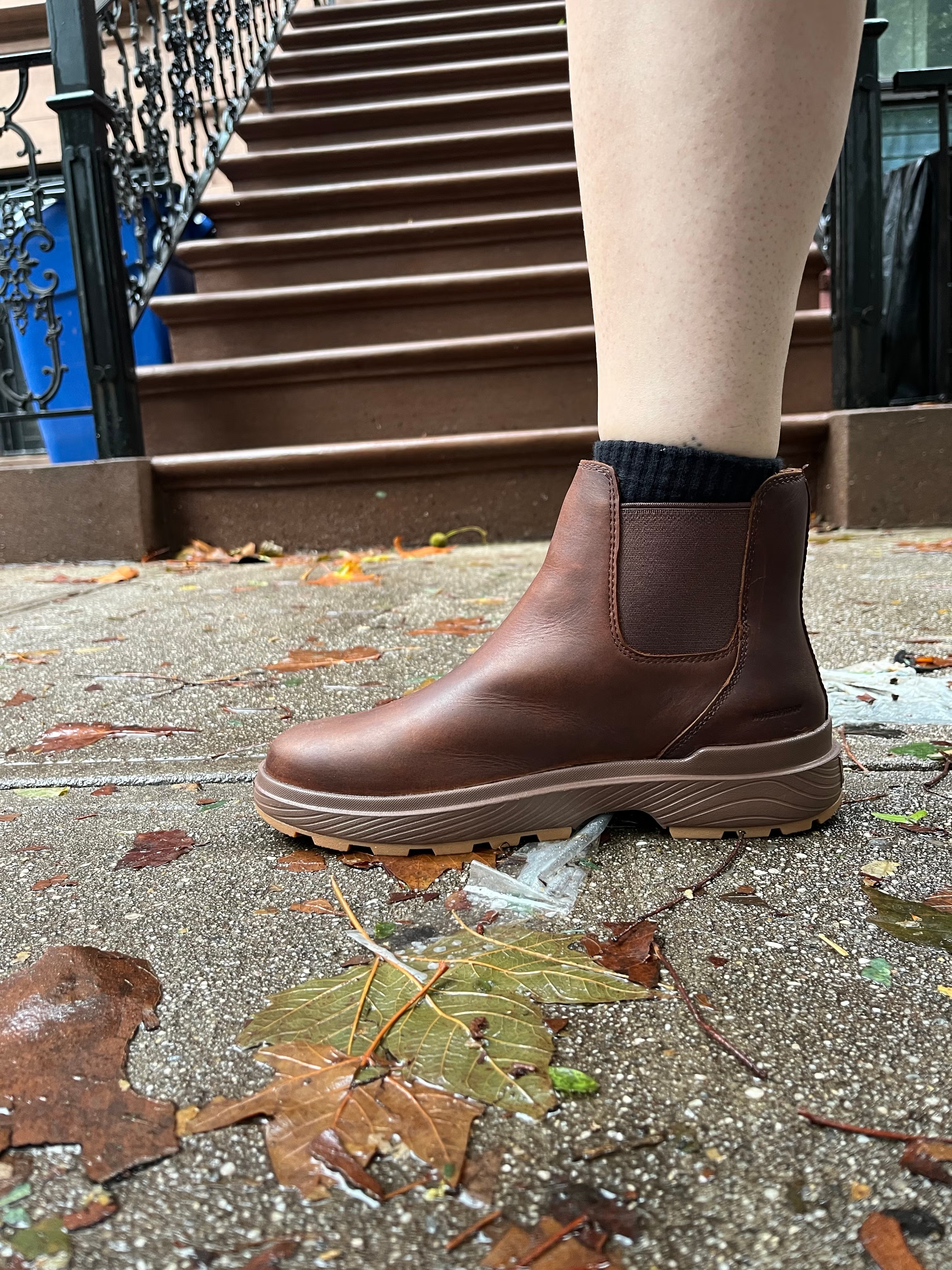
This Chelsea boot appears to bridge that gap. Its design incorporates targeted arch support while maintaining the sleek, minimal aesthetic of a traditional Chelsea boot. The pull-on silhouette offers convenience without laces, and the leather construction looks appropriate for both casual and semi-formal settings. Testers reported that the boot reduced pain during daily activities and felt comfortable during extended wear.
The critical caveat involves fit and individual variation. One important limitation emerged: the boot's arch support may not suit everyone with plantar fasciitis equally. Foot anatomy varies dramatically between individuals. Some people have high arches and need specific support profiles, while others have low or collapsed arches requiring different engineering. A boot designed with a standard arch height can work beautifully for some wearers and feel ineffective or even counterproductive for others.
Dr. Paul Kaminsky, a sports medicine physician, notes that custom orthotics remain the gold standard for plantar fasciitis treatment because they accommodate individual foot structure. Off-the-shelf boots, however stylish, represent a compromise between universal fit and personalized support.
This means the Chelsea boot works best for people with moderate arch support needs and typical foot geometry. Those with unusual arch heights or severe plantar fasciitis may find this boot insufficient without custom insole modifications. Additionally, some people with plantar fasciitis require additional heel cushioning beyond what a standard boot provides.
For the right foot type, this Chelsea boot solves a genuine problem. It allows people to manage plantar fasciitis without sacrificing their preferred style or appearance. The boot demonstrates that orthopedic function and contemporary design can coexist in everyday footwear.
Before purchasing, people should assess their specific support needs honestly. Trying the boot on and wearing it around the store for several minutes provides valuable information about fit. For those whose feet match the boot's design parameters, it delivers both relief and style. For others, a podiatrist consultation about custom insoles or alternative boots becomes worthwhile.