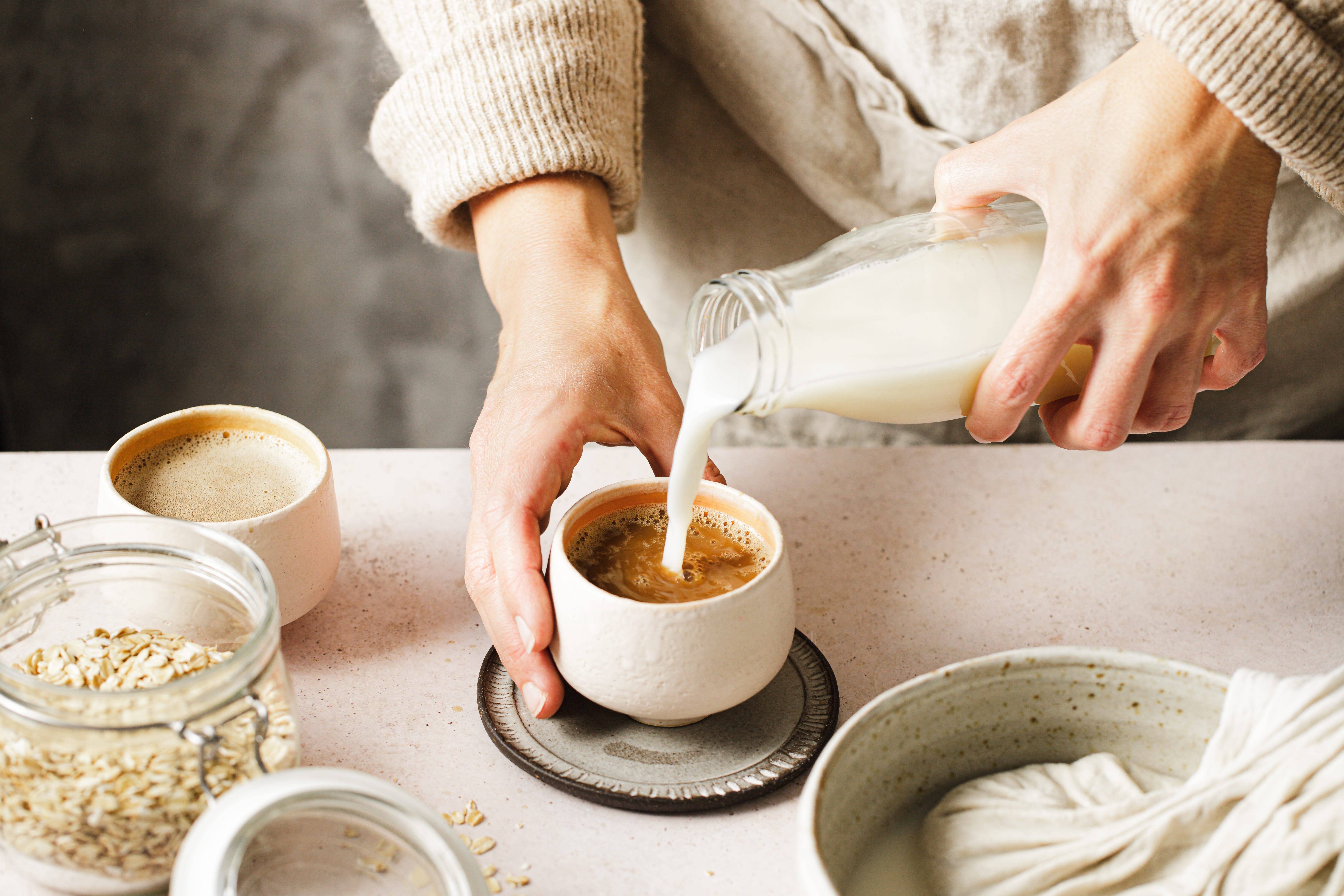
Oat milk offers benefits and drawbacks depending on your dietary needs. The beverage is made by blending oats with water and straining out the solids.
Samantha Cassetty, M.S., R.D., nutrition and wellness expert, notes that "some of the beneficial compounds in oats get passed through to the milk," though store-bought versions often contain extra ingredients for texture and appearance.
Several types of oat milk contain up to 2 grams of fiber per cup, according to Nichole Dandrea-Russert, M.S., R.D.N., a registered dietitian nutritionist at Purely Planted. Dairy milk provides no fiber. This fiber content "may help you achieve the recommended daily target of 25 to 38 grams," says Cassetty. Getting enough fiber improves constipation, helps lower cholesterol, and can help manage blood sugar spikes.
One beneficial fiber in oat milk is beta-glucan, a type of soluble fiber. Research in Pharmaceutics shows that beta-glucan activates various immune cells to help the body fight off illnesses. Oats also contain a unique alkaloid compound with antioxidant and anti-inflammatory properties, Cassetty explains.
Oat milk serves as a safe alternative for people with dairy, tree nut, or soy allergies. According to Food Allergy Research and Education, 6.2 million Americans are allergic to milk, 3.9 million to tree nuts, and 1.9 million to soy. However, not all oat milk is gluten-free.
Store-bought oat milk is more processed than homemade versions. The packaging process breaks down starch into simple sugars, increasing its glycemic index. Processing may also add emulsifiers and oils. Cassetty notes that "a 2023 study found that certain thickening agents, commonly used to create the creamy, milk-like texture in plant-based milk, were linked to a higher risk of heart disease and stroke." More research is needed to understand the direct impacts these ingredients may have on health.
Oat milk contains about 16 grams of carbohydrates per cup, comparable to a slice of bread. Per the U.S. Department of Agriculture, one cup contains less than 2 grams of protein, well behind dairy milk and soy milk, which each contain about 8 grams per cup.
Cassetty recommends choosing oat milk with no emulsifiers and no added sugars, especially if you have a sensitive digestive system. Dandrea-Russert suggests considering your personal nutrition needs and looking for oat milk fortified with vitamins D, A, and B12, as well as calcium.