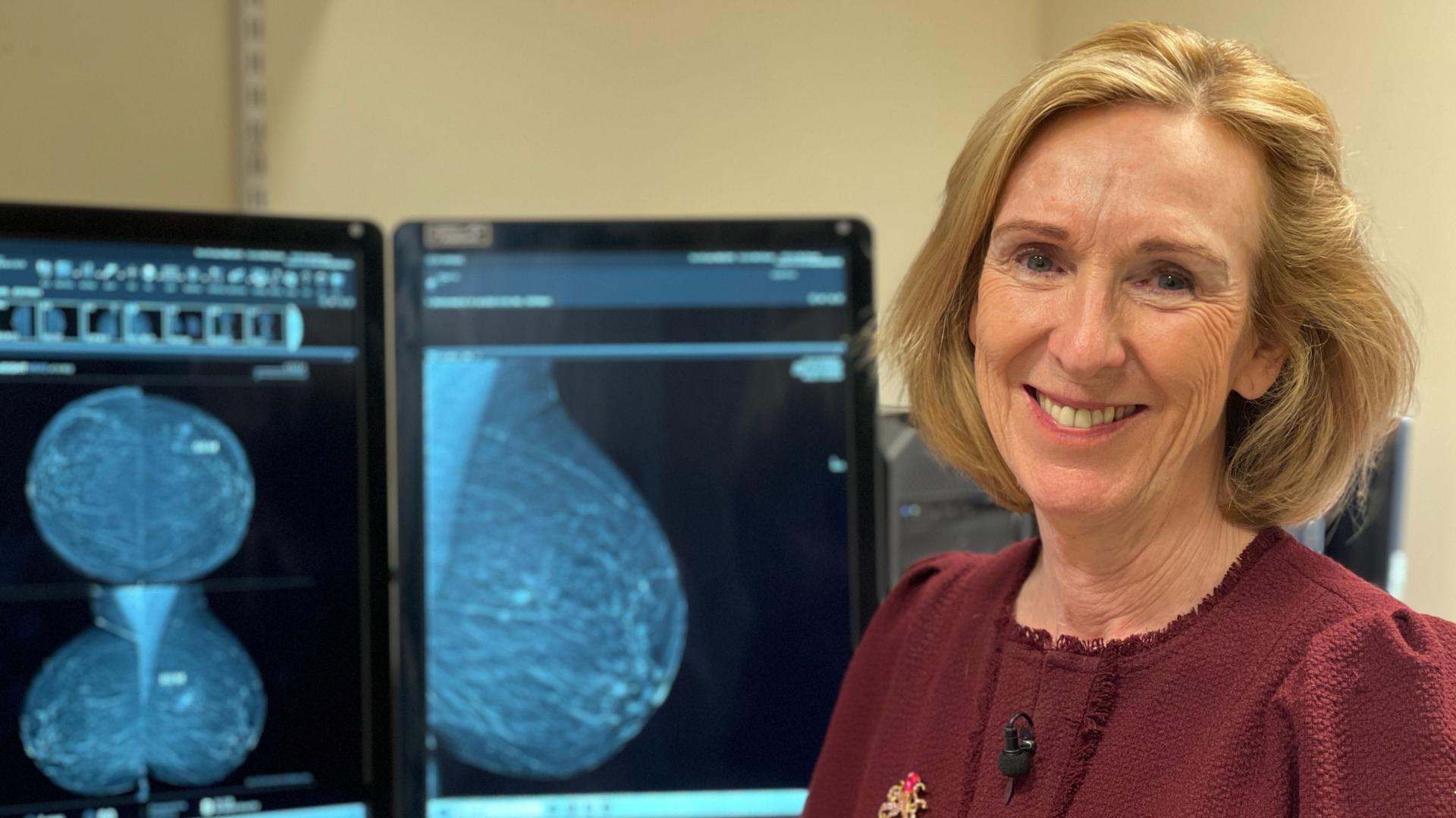
Nearly 700,000 women across the UK will be invited to join the EDITH trial, the world's largest study of how artificial intelligence can help detect breast cancer in routine screening.
The trial began recruitment at Cambridge University Hospitals and will expand to 30 sites across the UK. Currently, two NHS experts review each mammogram. In the trial, one human reader will be replaced by AI software trained to detect patterns in millions of previous images.
Sian Taylor-Phillips, professor of population health at the University of Warwick and co-chief investigator, said the team wants to "improve early cancer detection but we want to avoid the overdiagnosis of milder disease that would never have caused symptoms."
Prof Fiona Gilbert, co-chief investigator at the University of Cambridge, told the BBC there is a "huge shortfall" in radiologists and the number of imaging examinations is increasing by 8% a year. She noted that technology could "make reviewing these images more efficient, freeing up specialist breast radiologists to spend more time caring for patients with cancer, supporting faster diagnosis and earlier treatment."
Smaller studies have already shown AI can improve breast cancer detection rates. Researchers say they need to confirm it won't cause harm through unnecessary recalls for further tests. The trial will test whether AI-assisted tools grade images before or after they reach NHS experts.
The £10 million trial is funded by the National Institute for Health and Care Research and led by the University of Warwick, the University of Cambridge, and Cambridge University Hospitals NHS Foundation Trust with NHS England. Four AI companies are involved. The study is expected to last around three years.
Women aged 50 to 71 invited for routine screening can participate, though participation is voluntary. Every scan will still be reviewed by a specialist.