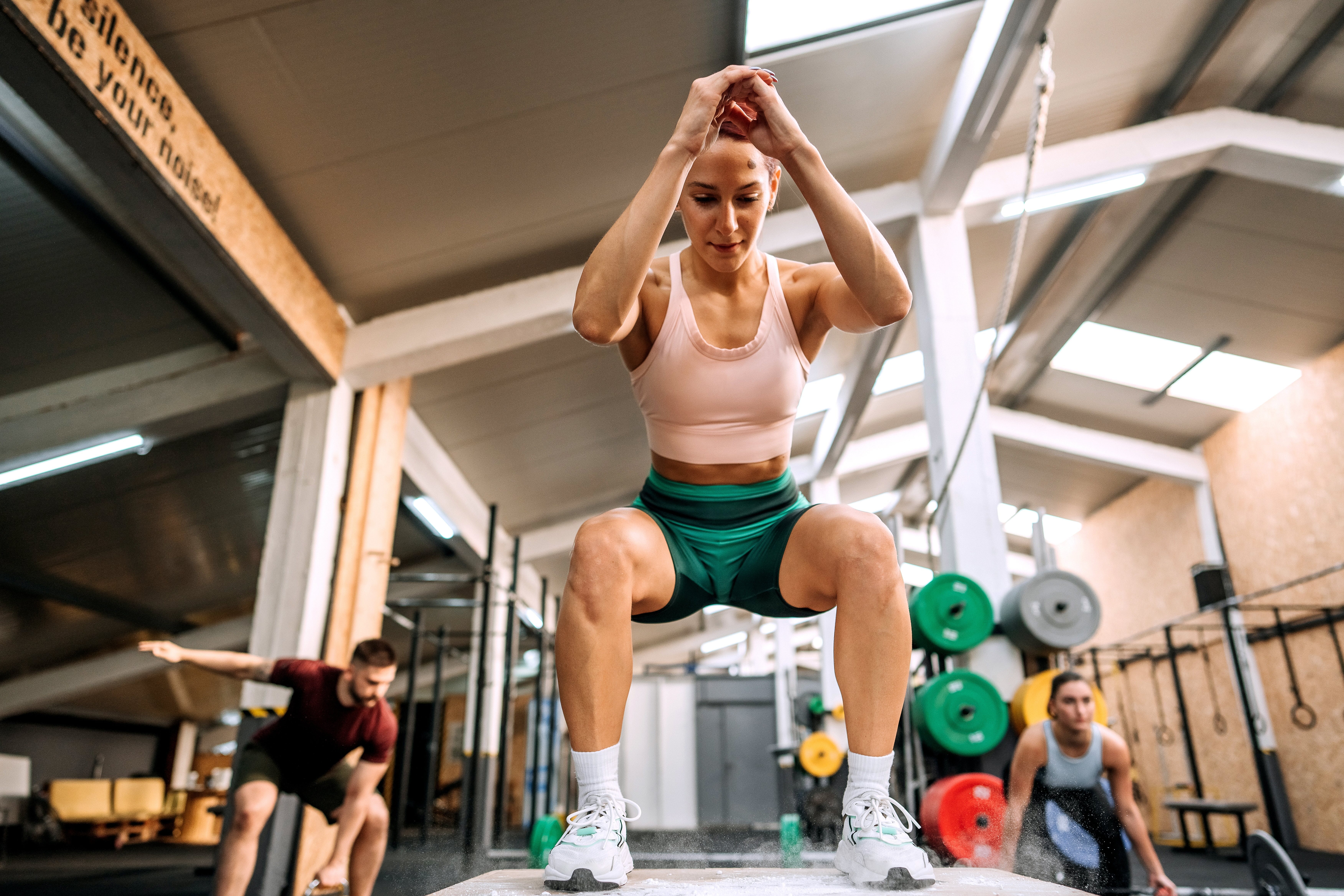
Tina Tang discovered a gap in her bone-health routine at 52. Despite lifting heavy weights and eating enough protein, her annual physical revealed osteopenia, or low bone density. The missing piece turned out to be plyometrics, exercises that involve explosive, high-impact movements like jumping.
Many women over 40 avoid jumping workouts due to concerns about joint pain, pelvic floor issues, and fragile bones. But board-certified orthopedic surgeon Pamela Mehta, MD, founder of Resilience Orthopedics in Los Gatos, California, says these concerns are rooted in outdated pseudoscience. For most otherwise healthy women, plyometrics are among the most effective ways to protect bone health long term and may even reverse bone loss.
A recent review in Current Osteoporosis Reports found plyometrics among the most effective tools for improving bone density and reducing fracture risk in post-menopausal women. A 2025 review in BMC Musculoskeletal Disorders found that active people who added plyometrics to their routine saw promising improvements in bone mineral density at the spine and hip. A 2023 review in the Journal of Sports Sciences observed that high-impact jumping exercise improved bone mineral density more than non-jumping alternatives.
How plyometrics work matters: When you land from a jump, sensor cells in bones called osteocytes detect the impact and signal bone builder cells called osteoblasts to lay down new bone. This rapid, high-impact loading is the exact type of stimulus bones need to remodel and grow stronger, explains Parini A. Patel, DO, an interventional pain and musculoskeletal medicine physician at Atlantic Health in New Jersey.
Tang got a follow-up DEXA scan at 54, just two years after adding plyometrics to her routine. The scan revealed measurable improvements in bone density, including in her right hip, the area that had taken the biggest hit on her initial scan.
Women face higher lifetime risks of osteopenia and osteoporosis than men. Eighty percent of all people with osteoporosis are women. Estrogen supports new bone formation, but estrogen levels drop during perimenopause and menopause, causing women to lose bone mass quickly. Women also reach lower peak bone mass in early adulthood and have smaller frames than men, providing less skeletal reserve as age-related bone loss begins.
Plyometrics also strengthen systems that prevent fractures by training the central nervous system to increase reaction time. Fast reaction time matters for older adults because catching yourself during a trip can mean the difference between falling and breaking a hip while walking on the sidewalk.
The spine is the most common osteoporotic fracture site among women, with the hip a close second. Both regions respond especially well to plyometric training because they absorb the most force when you land, Dr. Patel says. Health care providers emphasize that plyometrics should complement, not replace, traditional strength training, which supports muscle and tissue health more broadly.